A push pull legs split divides training into three sessions: pressing muscles, pulling muscles and legs. Run it three days a week for 45 to 60 minutes each and you cover your whole body with rest built in. It suits busy schedules because every workout has one clear job and no gym day is wasted.
Why this split fits a packed calendar · Day one, two and three at a glance · Sets, reps and the 45-minute rule · When the week falls apart · Where Strong Peak™ fits in the routine
- Three sessions a week cover the whole body with recovery built in.
- Pick four or five lifts per day and keep each session under an hour.
- A schedule you actually keep beats a perfect program you skip.
- Meals, water and sleep carry as much weight as the split itself.
Why this split fits a packed calendar
Most training plans fail for a boring reason: they assume you have six free evenings. A push pull legs split, usually shortened to PPL, asks for three. Each session groups muscles that already work together, so you stop bouncing between machines and start finishing workouts on time.
The logic is simple. Pushing movements use your chest, shoulders and triceps. Pulling movements use your back, rear shoulders and biceps. Leg day takes care of everything below the belt. Because the groups rotate, the muscles you hit on Monday get at least two days before you ask for more.
Day one, two and three at a glance
Keep the menu short. Four or five exercises per day is plenty, and repeating the same lifts week to week makes progress easy to see. Write the weights in your phone after each set so next week's first lift takes ten seconds to plan. Warm up with five minutes of easy cardio and one or two light ramp-up sets before your first heavy lift; it costs almost no time and makes the opening sets feel far smoother.
- Push day: bench press or push-ups, overhead press, incline dumbbell press, triceps pushdowns.
- Pull day: rows, pull-ups or lat pulldowns, face pulls, dumbbell curls.
- Leg day: squats, Romanian deadlifts, lunges, calf raises, a short core finisher.
Ready to start your routine?
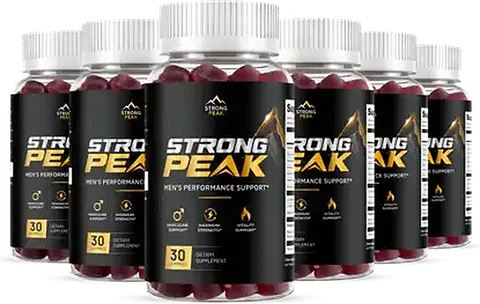
Strong Peak: a daily men's performance gummy with a printed label and a 60-day money-back guarantee.
Order Strong Peak NowSets, reps and the 45-minute rule
For your first lift of the day, work in the range of 5 to 8 reps for three or four sets. For the remaining lifts, move up to 8 to 12 reps for two or three sets. Rest roughly two minutes after heavy sets and 60 to 90 seconds after lighter ones.
Set a timer. If a session drifts past 60 minutes, trim an exercise rather than rushing the rest of the plan. The goal is a workout you can repeat all season, not a one-off personal best. Add a little weight or one extra rep when every set feels solid, and hold steady when it does not. Small steady jumps stack up faster than big jumps you have to walk back. The CDC physical activity basics page lists weekly activity targets, and a three-day split with a short walk or two on the off days lands comfortably in that territory.
When the week falls apart
Missed Tuesday? Do not stack two sessions on Wednesday. Slide the whole sequence forward one day and keep going. The order matters less than the rhythm, and the rotation always picks up where you stopped.
On a truly crammed day, run a 20-minute version: one big lift from the planned session, two supporting moves, done. A short workout still keeps the habit alive, and the habit is what carries a plan through busy months. Travel weeks work the same way: a hotel room, a resistance band and a pair of push-up sessions beat a full week off.
Where Strong Peak™ fits in the routine
Training is only one piece. Meals with enough protein, steady water and a regular bedtime do the heavy lifting for how you feel across the week. Many men then add a small daily anchor on top. Strong Peak is a gummy supplement positioned by the brand as men's performance support, and it fits easily beside a morning routine because there is nothing to mix or measure.
Follow the directions printed on the bottle label, and read the formula page if you want to see how the brand describes what is inside. Think of it as one habit in a stack, next to your lifting schedule rather than a replacement for it.